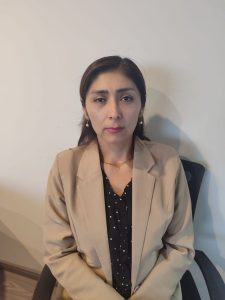
Raúl Armando Manga Valenzuela, manager of Tema Mexico and specialist in industrial safety, participated in the news program Es Tendencia on ADN 40 to analyze its causes and consequences.
On Wednesday, September 10, at around 2:30 p.m., a pipeline carrying LP Gas with a capacity of 45,000 liters overturned in the vicinity of the La Concordia bridge, in the Iztapalapa district of Mexico City. The accident caused a massive gas leak and the formation of a flammable and explosive cloud that forced the activation of emergency protocols, the evacuation of the population from the area and the deployment of security and civil protection forces to avoid a tragic outcome. The magnitude of the incident reminded that, although this type of events are not frequent, every hazardous material transport route poses a latent risk when it crosses densely populated urban areas.
The technical and regulatory perspective
In this context, the debate on the regulation of hydrocarbon transportation is once again at the center of the public agenda. The existence of technical standards and procedures does not always guarantee safety by itself, since the determining factor is the degree of compliance, the supervision capacity and the preventive culture with which both the companies and the responsible authorities operate. During his participation in the news program Es Tendencia on ADN 40, Raúl Armando Manga Valenzuela, manager of Tema Mexico and specialist in industrial safety, emphasized: “These types of events do not occur frequently, but when they do, the consequences can be catastrophic. They are not usually due to a single cause, but to a chain of small accumulated failures”. He also pointed out that in Mexico there are Official Mexican Standards that regulate this activity, such as NOM-020-SICT-2-2022: specifications for design, construction and testing of auto tankers, NOM-007-SESH-2010 that regulates the operation and maintenance conditions of vehicles that transport LP Gas, NOM-018-STPS-2015 that defines the identification of hazardous chemical substances, or NOM-007-SCT-2-2023 and NOM-002-SCT-2-2011 that establish technical and signaling provisions in the land transportation of high-risk materials.
A call to reinforce prevention
Raúl stressed that, beyond the regulatory framework, safety depends on practical and sustained measures over time, such as the permanent updating of emergency response plans, the performance of periodic inspections with rigorous criteria, the renewal of permits in accordance with the established deadlines and the constant training of operators and technicians. Only in this way is it possible to reduce the risk of a combination of carelessness or technical failures leading to an incident with serious human, environmental and economic consequences. The lack of effective controls, he warned, could mean not only the loss of lives, but also irreparable damage to the environment, substantial material losses and the erosion of public confidence in the institutions responsible for supervision.
The Iztapalapa accident should not be understood as an isolated episode, but as a reminder of the importance of strengthening the regulatory framework and guaranteeing its application without exceptions. Every vehicle that transports hydrocarbons crosses communities, crosses busy roads and exposes the population to risks that can be prevented with strict protocols, a culture of responsibility and active vigilance. Safety in this sector cannot be left to chance or post-accident reaction, but must be a priority objective from the planning to the daily execution of operations.
At Tema, we reiterate our commitment to safety, regulatory compliance and prevention. We firmly believe that what happened in Iztapalapa should serve as a wake-up call for authorities, companies and society as a whole. Strengthening regulation, strictly enforcing existing standards, fostering a culture of prevention and promoting shared responsibility among those who produce, transport, supervise and consume these resources is essential to reduce the likelihood of events like this happening again.